Willow Spiling Bank Stabilisation

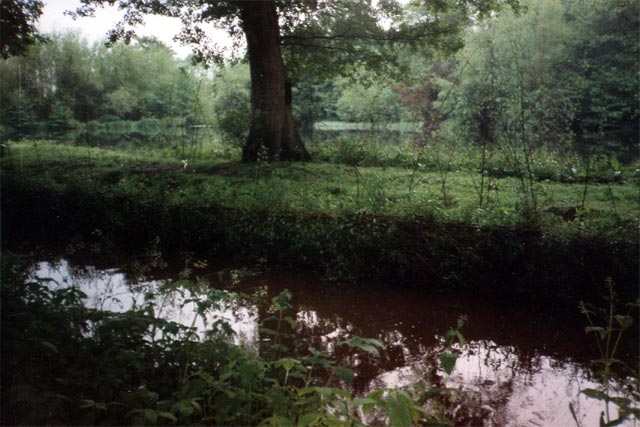
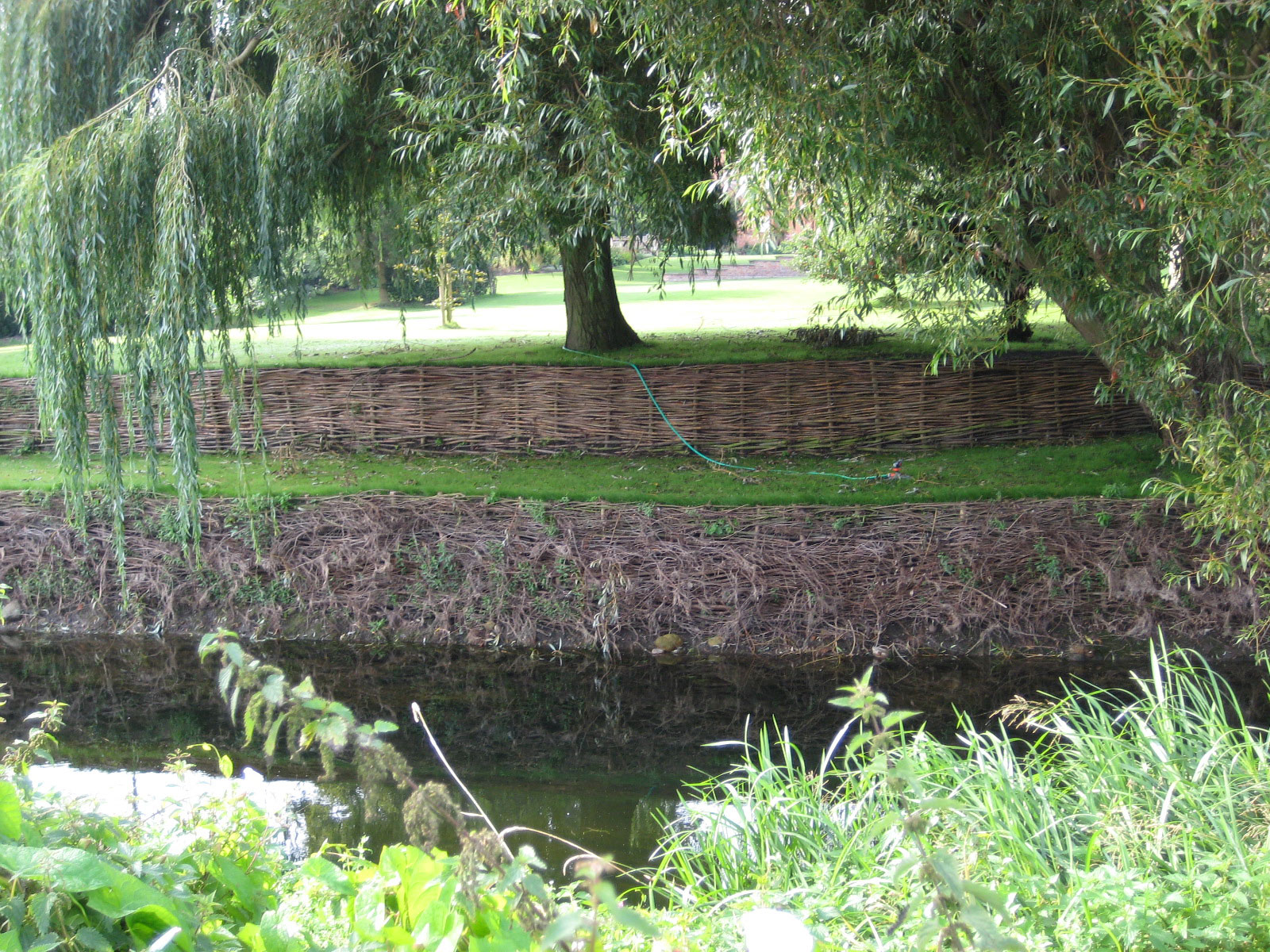
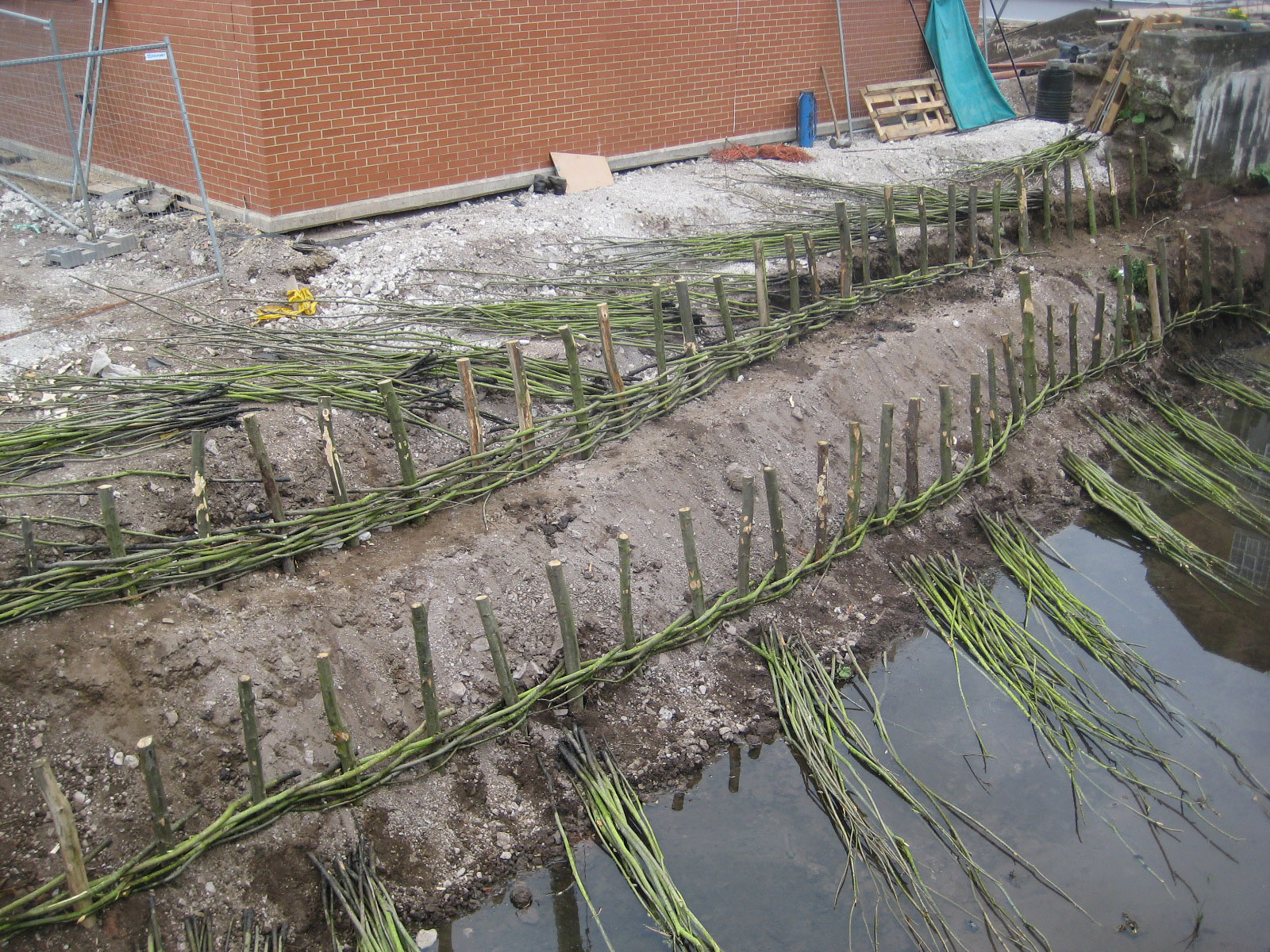
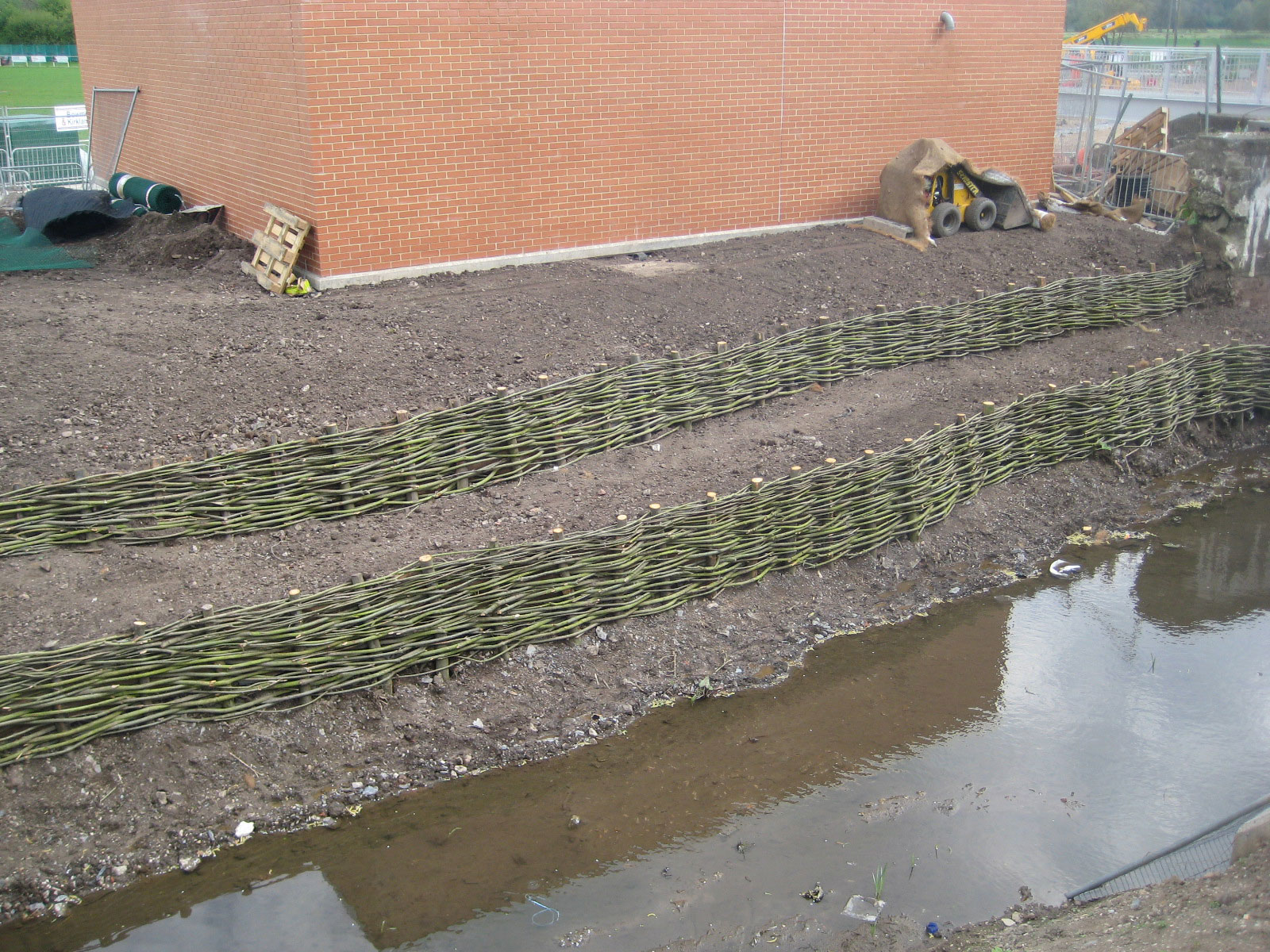
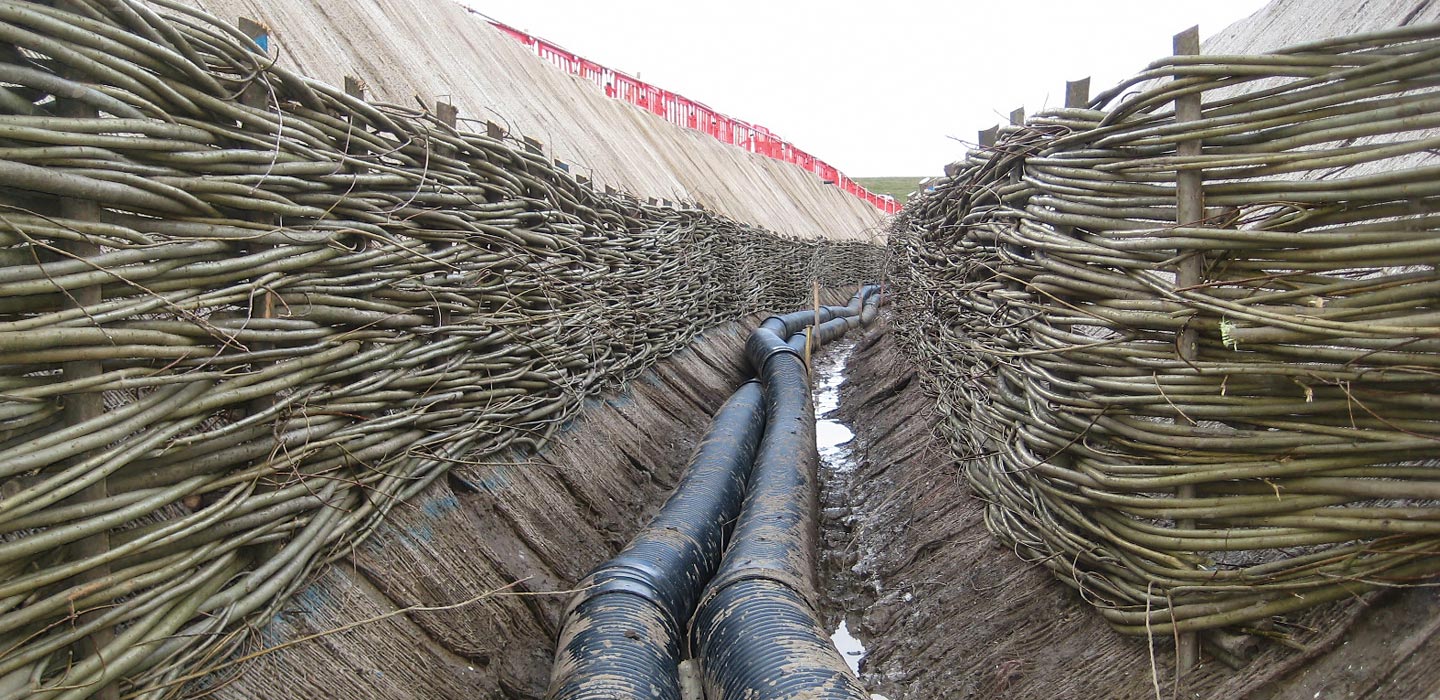
Willow spiling is a traditional form of riverbank stabilisation or revetment. Carried out during winter or early spring, live willow rods are woven around upright thick willow rods, supported with tanalised posts, driven into the stream bank where erosion and collapse is occurring. In spring, these living willow rods send out shoots and roots into the bank holding the soil firm, thus solving the problem.

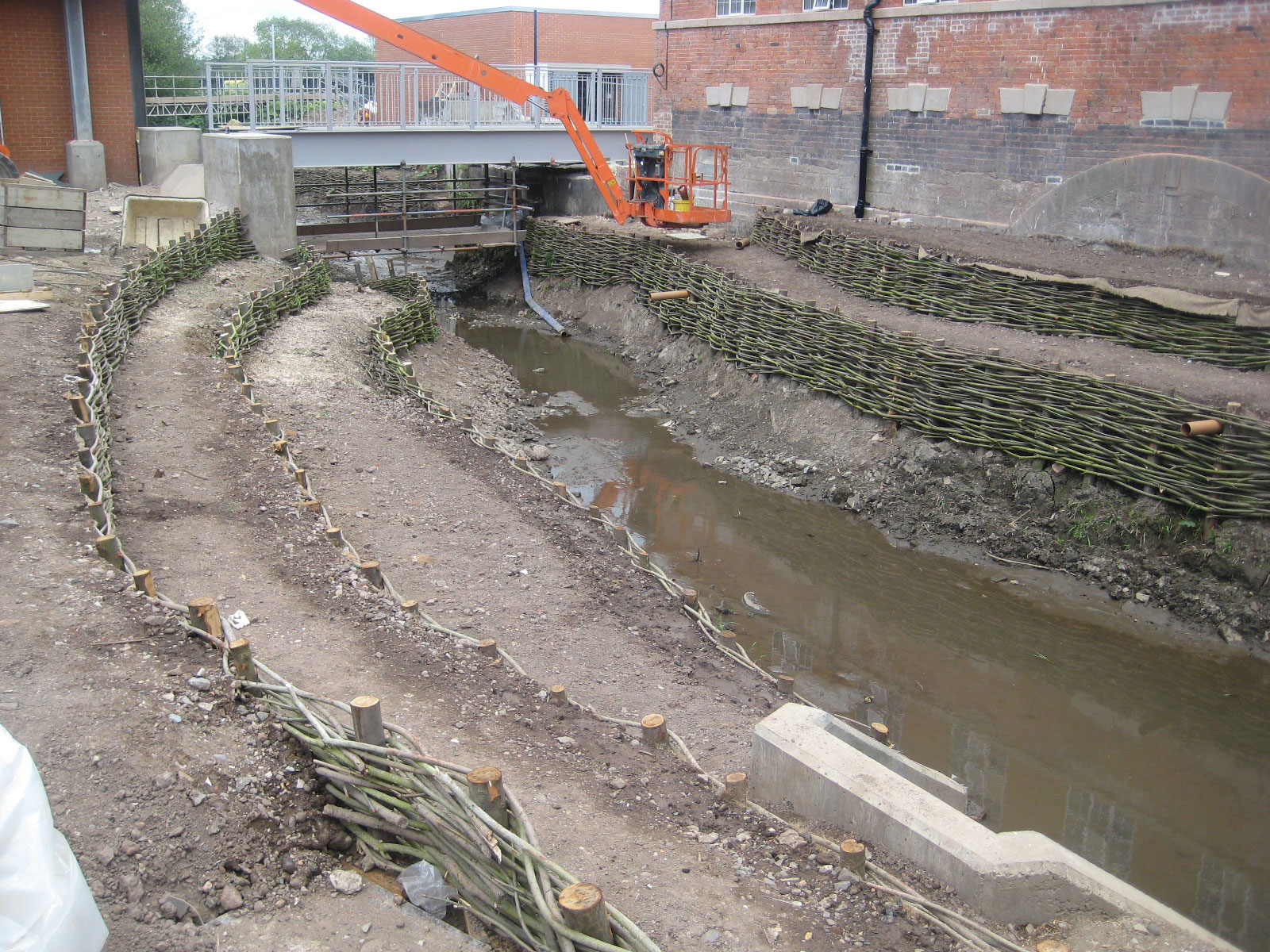
Willow spiling is best built at no more than 1 metre high, if the bank in question is higher, then one or more stepped tiers are used to overcome this problem, each tier is backfilled with top soil.

This method is a soft form of river engineering, requiring minimal heavy equipment and so causing least disturbance to the river environment. A rough-finished surface to the wall of spiling is preferable. Such a surface slows the river flow near the bank allowing the slow moving water to deposit the silt and mud it carries, thus adding to the protection of the riverbank. Overtime, the increased deposits and the spreading willow roots stabilise the bank and create a naturalised wildlife habitat.

Willow Spiling Bank Stabilisation - Examples
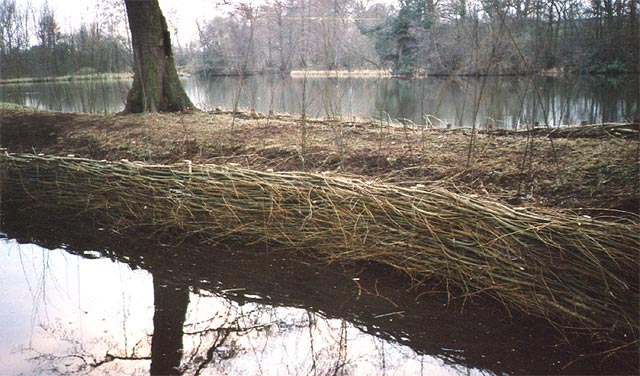
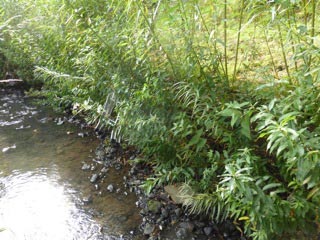
<span>Ref: D1</span><br>Winter: willow rods woven about willow rods and supporting posts, driven into the bank. The rough finish reduces the river current protecting the bank and is an ideal site for nesting birds. <span>Ref: D2</span><br>Spring: willow rods put forth strong growth. This green engineering has an attractive appearance. No unsightly metal piles or rock filled gabions. <span>Ref: D3</span><br>Terracing around a ramp allows access to the river. <span>Ref: D4</span><br>Protecting a garden from erosion and showing early spring growth. <span>Ref: D5</span><br>Stout living posts driven into the ground at half metre intervals. <span>Ref: D6</span><br>Living willow rods woven between the posts, awaiting backfilling with soil. <span>Ref: D7</span><br>The backfilled soil is supported by the attractive woven fence, without unsightly metal shuttering or gabions. <span>Ref: D8</span><br>The back filled soil will eventually become colonised by natural river side vegetation. <span>Ref: D9</span><br>The willow rods will root into the bank helping to stabilise the soil. <span>Ref: D10</span><br>Vigorous regrowth after three years, now ready for coppicing back down to ground level. <span>Ref: D11</span><br>The willow is already sprouting, despite the absence of any river or pond. <span>Ref: D12</span><br>Plenty of summer regrowth with roots already penetrating the stream bank, increasing its stability. <span>Ref: D13</span><br>Low willow spiling creates terraces in this steep garden, allowing easier access. <span>Ref: </span><br>Posts driven in with willow rods layed out ready for weaving, Perth, Scotland. <span>Ref: </span><br>The house and footpath are protected with two tiers of weave, each at 1 metre high, Perth, Scotland. <span>Ref: </span><br>Tannalised posts are driven into the bank with live willow rods waiting to be woven between them, Lowestoft, Norfolk. <span>Ref: </span><br>Willow spiling in place, protecting the garden on this development, Lowestoft, Norfolk. <span>Ref: </span><br>Awaiting backfilling with topsoil, Lowestoft, Norfolk. <span>Ref: </span><br>A stream bank collapsing in a garden, Macclesfield, Cheshire. <span>Ref: </span><br>Willow spiling in place and backfilled with topsoil, Macclesfield, Cheshire. <span>Ref: </span><br>Regrowth trimmed to the desired height, Macclesfield, Cheshire. <span>Ref: </span><br>Three years of regrowth of the willow, ready for coppicing, River Idle, Nottinghamshire. <span>Ref: </span><br>Willow growing from the two small tiers, protecting the garden from collapse into the river.

Willow Spiling Bank Stabilisation - Prices

Please contact us for more information.

Please contact us for more details and a quote